




Protect Your Arteries Starting Today
Early treatment helps preserve healthy circulation and overall well-being every day.
Schedule Consultation


 Takayasu Arteritis Treatment

Identify vascular inflammation. Access targeted therapy.
Takayasu arteritis is a rare large-vessel vasculitis affecting the aorta and its major branches. It commonly affects young women and leads to narrowing of arteries, reducing blood flow to organs.

Rare Vasculitis Expertise & Early Diagnosis

Advanced Vessel Inflammation Treatment Plans

Long-Term Monitoring & Relapse Prevention
Takayasu Arteritis is a rare autoimmune disease in which inflammation affects the body’s largest arteries, particularly the aorta and its major branches. This inflammation can cause the blood vessels to narrow, reducing blood flow to vital organs and leading to symptoms such as fatigue, arm or leg pain, dizziness, headaches, and high blood pressure.
At Niruj Rheumatology & Allergy Clinic, our specialists provide comprehensive evaluation, advanced diagnostic support, and personalised treatment plans to control inflammation, preserve blood vessel health, and help patients maintain a better quality of life.
Signs Unique to Takayasu Arteritis
Takayasu arteritis is often called the ‘pulseless disease’. Patients may have: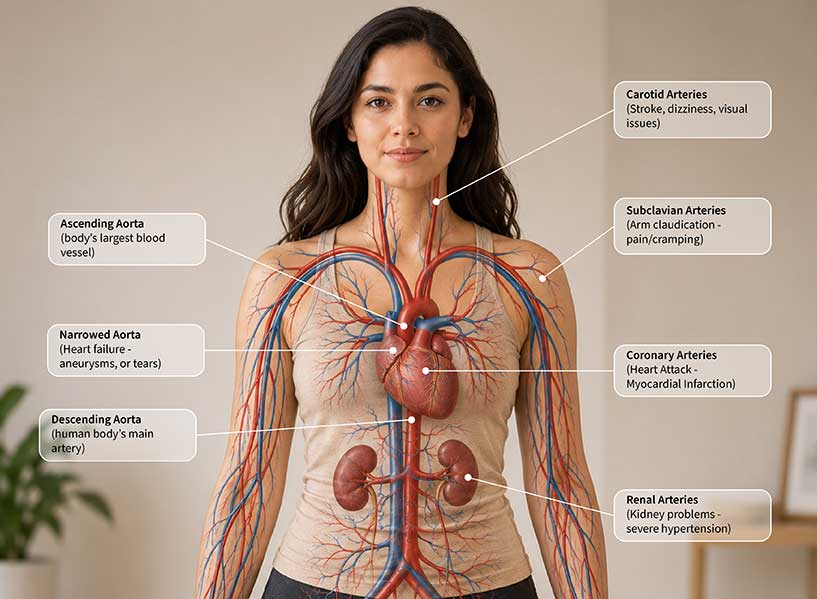

Early, non-specific signs that active vessel inflammation is present.

Pain caused by reduced blood flow to the limbs during activity.

Can result from reduced blood flow to the brain.

May indicate involvement of the coronary arteries supplying the heart.

Reduced blood flow to the eyes can affect vision.

A hallmark sign that gives this disease its ‘pulseless’ nickname.

Large-Vessel Vasculitis

Affects Aorta & Major Branches

Pediatric to adult population (15–50), mostly women

Also Called “Pulseless Disease”

Not Curable, But Controllable
–>Treatable & Controllable
Takayasu-Affected Artery
Healthy Artery


Early diagnosis and proper treatment can prevent serious complications like stroke, heart attack, kidney problems and hypertension.
Our team of experienced specialists provides expert care tailored to your unique health needs.



Compassionate, evidence-based rheumatology care focused on long-term wellness.
Evidence-Based Treatment
Internationally accepted protocols tailored to each patient’s condition.

10+ Years
Specialized Rheumatology Experience

Compassionate & Long-Term Care
Dedicated management of autoimmune and joint disorders with continuous follow-up for sustained health improvement.
View ProfileAccurate & Early Diagnosis
Early detection prevents irreversible joint damage and long-term disability.

Modern Diagnostic Support
Advanced lab investigations and imaging for precise assessment.
Transparent Communication
Clear explanation of diagnosis, treatment options, and expected outcomes.20K+
Patients Managed
Our Approach to Personalized Takayasu Arteritis Care

Physician assesses weak pulses, blood pressure differences, fatigue, and vascular pain.

Advanced imaging and blood work confirm arterial narrowing and vessel inflammation.

Immunosuppressive strategies reduce vascular swelling and preserve vital blood flow.

Continuous monitoring prevents vascular complications and ensures optimal arterial function.
Our Approach to Personalized Rheumatology Care


Protect Your Arteries Starting Today
Early treatment helps preserve healthy circulation and overall well-being every day.
Schedule Consultation