




Say Goodbye To Gout Pain Today
Lower uric acid naturally with expert medical care and guidance.
Schedule Consultation

 Gout and Hyperuricemia

Control Uric Acid. Prevent Painful Gout Flares.
Gout is a type of inflammatory arthritis caused by deposition of uric acid crystals in the joints, leading to sudden episodes of severe pain, swelling, and redness, classically affecting the big toe.

Advanced Uric Acid Control Protocols

Personalized Diet & Flare Prevention Plans

Long-Term Gout-Free Lifestyle Management
Gout is a type of inflammatory arthritis caused by deposition of uric acid crystals in the joints, leading to sudden episodes of severe pain, swelling, and redness, classically affecting the big toe. At Niruj Rheumatology & Allergy Clinic, our rheumatology specialists provide personalised care and long-term management for gout and hyperuricemia.
Understanding Hyperuricemia
Hyperuricemia means that the level of uric acid in your blood is higher than normal. Uric acid is produced naturally when the body breaks down substances called purines. If your body makes too much uric acid or your kidneys cannot remove enough of it, the uric acid builds up and may form crystals in the joints, leading to gout attacks.
Although high uric acid levels may not always cause symptoms, early evaluation and treatment can help prevent gout attacks and related complications.
Contact Us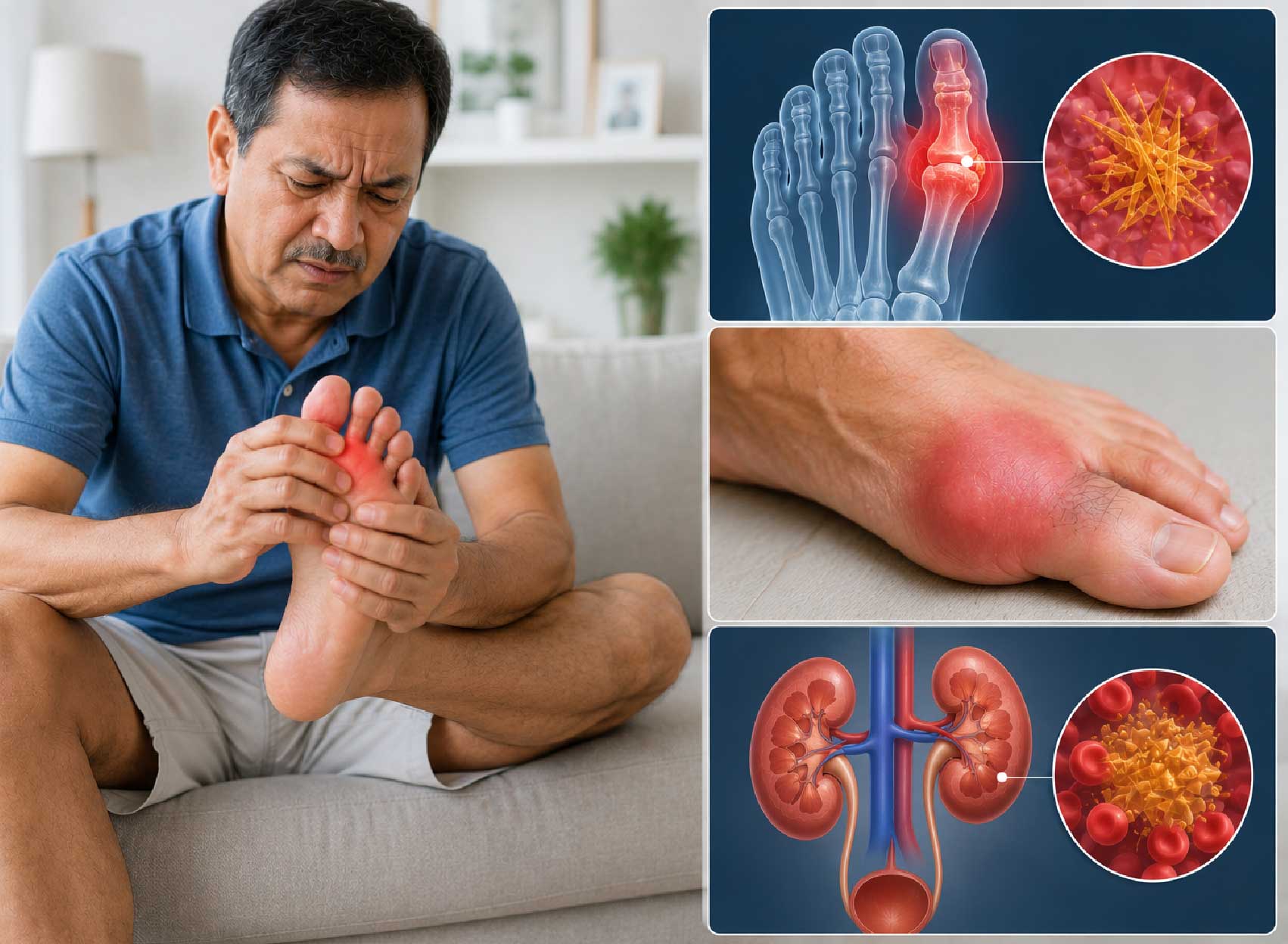

Attacks come on quickly, often overnight, without warning.

The joint becomes visibly swollen, red and hot to touch.

Even light contact, such as bedsheets, can be painful.

The classic first site of a gout attack.

Pain can make weight-bearing on the affected joint very difficult.

Chalky uric acid deposits that build up under the skin over time.
Disease at a Glance

Inflammatory Arthritis

Affects Big Toe, Knee & Ankle

More Common in Men

Recurrent, Episodic Condition

Highly Treatable & Preventable
Recommended serum uric acid level is below 6 mg/dL. In patients with tophi, the target level may be below 5 mg/dL.
 Red meatOrgan meats (liver, kidney)Sardines & shellfish (anchovies, shrimp)Alcohol (especially beer)Sugary drinks (soda, juice)Low-fat dairy (milk, yogurt)Plenty of waterFruits & vegetablesWhole grains (quinoa, oats, brown bread)Coffee (moderate)
Gouty Joint
Healthy Joint
Risk Factors


Early diagnosis and proper uric acid control can prevent joint damage, kidney stones, and chronic tophaceous gout.


Our team of experienced specialists provides expert care tailored to your unique health needs.



Compassionate, evidence-based rheumatology care focused on long-term wellness.
Evidence-Based Treatment
Internationally accepted protocols tailored to each patient’s condition.

10+ Years
Specialized Rheumatology Experience

Compassionate & Long-Term Care
Dedicated management of autoimmune and joint disorders with continuous follow-up for sustained health improvement.
View ProfileAccurate & Early Diagnosis
Early detection prevents irreversible joint damage and long-term disability.

Modern Diagnostic Support
Advanced lab investigations and imaging for precise assessment.
Transparent Communication
Clear explanation of diagnosis, treatment options, and expected outcomes.20K+
Patients Managed
Our Approach to Personalized Gout and Hyperuricemia Care

Evaluating symptoms, flare frequency, uric acid levels, and overall joint health.

Advanced investigations identify urate crystal buildup and disease progression accurately.

Tailored therapies reduce uric acid and minimize future gout flare-ups effectively.

Routine reviews support lasting disease control and protect joints from complications.
Our Approach to Personalized Rheumatology Care

Say Goodbye To Gout Pain Today
Lower uric acid naturally with expert medical care and guidance.
Schedule Consultation